
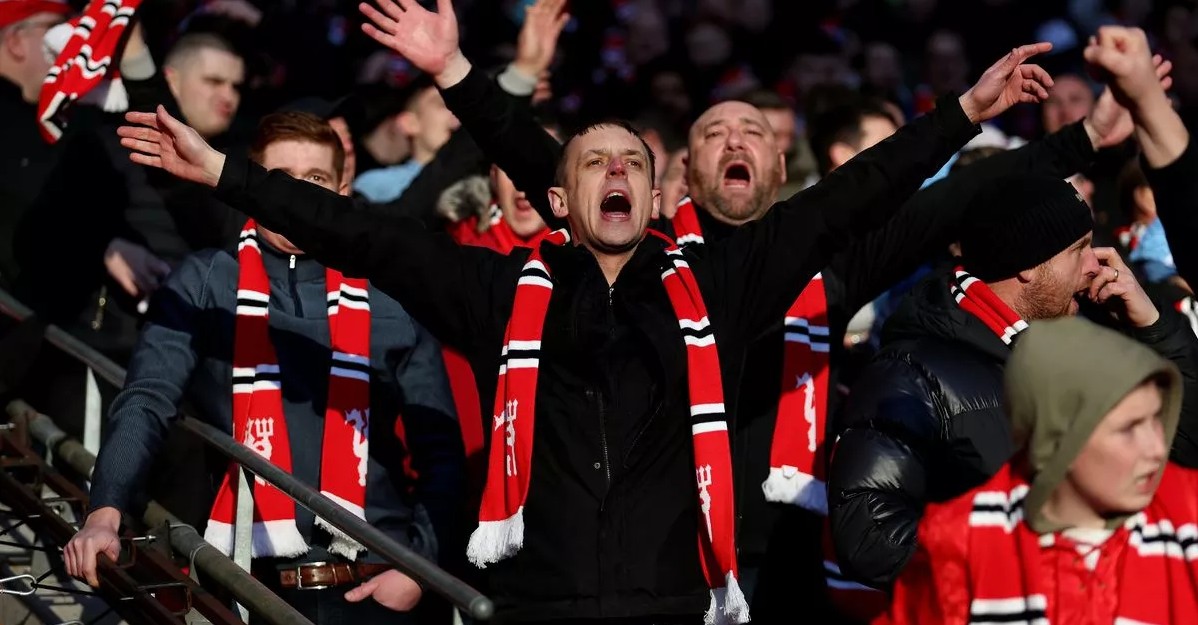
Football is more than just the 90 minutes on the pitch—it is an immersive cultural experience. Among the most powerful elements of this culture are chants and songs, which turn stadiums into theatres of sound. For Manchester United, one of the most supported clubs in the world, chants are not just background noise; they are central to identity, passion, and tradition.
The Manchester United chants and songs are a living soundtrack of history and culture, carrying the voices of generations. To understand their power is to understand the heartbeat of Old Trafford. Exploring their roots reveals how deeply tied they are to the club’s cultural legacy.
Origins of Football Chants at Manchester United
The tradition of singing in football stadiums dates back to the late 19th and early 20th centuries. Supporters of Newton Heath, the precursor to Manchester United, were among the early adopters of chants as expressions of unity and encouragement. Simple songs, often adapted from folk tunes and pub melodies, became a way to energize the team and intimidate rivals.
As Manchester United emerged in 1902, these chants evolved into structured anthems that mirrored the growth of the club itself. Songs were not merely entertainment—they were declarations of belonging.
Influence of Newton Heath Era
In the Newton Heath era, singing at matches was modest but symbolic. Supporters sang workers’ songs, railway tunes, and local ballads. First, they connected directly to the railway community. Second, they gave identity to a fledgling football club. Third, they set the stage for more sophisticated chants in later years.
Chronologically, as Newton Heath became Manchester United, these early songs faded but left behind a cultural foundation. The act of singing itself became part of the matchday tradition, and this tradition expanded significantly once the rebranded club began drawing larger crowds.
The Evolution of United’s Famous Chants
From the early 20th century onwards, Manchester United fans built a diverse catalogue of chants. In the 1950s and 1960s, chants reflected admiration for stars like Duncan Edwards and George Best. By the 1970s, terrace culture brought louder, more coordinated songs, with groups of supporters leading chants in unison.
This evolution demonstrates continuity: chants adapted to new generations of players while retaining the underlying passion. The tradition repeated itself with each decade, culminating in iconic anthems such as “Glory Glory Man United.”
Iconic Anthem – “Glory Glory Man United”
No song embodies Manchester United more than “Glory Glory Man United.” Inspired by the tune “Glory Glory Hallelujah,” it became the official anthem of the club during the 1980s and remains an essential part of Old Trafford culture today.
Its reason for centrality is clear: the anthem unites fans, players, and traditions under a single chorus. Sung before matches, after goals, and at celebrations, it became synonymous with United’s dominance in English and European football.
Cultural Impact of “Glory Glory”
The cultural weight of “Glory Glory Man United” lies in its simplicity and accessibility. Its lyrics are easy for crowds of tens of thousands to chant in unison, creating a wall of sound that embodies collective pride.
Beyond Old Trafford, the anthem resonates with fans globally. From Asia to the Americas, supporters’ clubs echo the same chant, proving that Manchester United’s voice is not confined to Manchester but reverberates worldwide.
Other Popular Manchester United Songs
While “Glory Glory” is the anthem, Manchester United fans boast a diverse repertoire of songs that celebrate players, history, and pride. These include:
- “We’ll Never Die” – honoring the Busby Babes and resilience after the Munich Air Disaster.
- “Take Me Home, United Road” – celebrating journeys to Old Trafford.
- “Viva Ronaldo” – dedicated to Cristiano Ronaldo during his spells at the club.
- “20 Times, 20 Times Man United” – commemorating league victories.
- “Who the F** Are Man United?”* – a defiant chant sung to rival fans.
This unordered collection reflects the creativity of supporters and the adaptability of fan culture across eras.
Chants as Expressions of Identity and Pride
Manchester United chants and songs are more than football noise; they are expressions of identity. They articulate resilience after tragedy, pride in victories, and devotion to players. Chants also act as collective storytelling, passing history down from one generation to the next.
These cultural layers extend to modern fandom, where engagement is not limited to stadiums. Supporters immerse themselves in football narratives, digital communities, and global entertainment platforms like ยูฟ่าเบท168, connecting the passion of chants with broader experiences.
Comparisons with Rival Club Chants
To understand Manchester United’s chants fully, it is useful to contrast them with rival clubs.
- Liverpool fans are famous for “You’ll Never Walk Alone,” a ballad with deep emotional resonance.
- Manchester City fans sing “Blue Moon,” a softer, melancholic anthem tied to identity.
- Arsenal supporters often chant rhythmic terrace songs rather than an official anthem.
Compared with these, United’s chants strike a balance between passion and variety. While Liverpool and City focus on single defining songs, Manchester United fans maintain a broader, ever-evolving catalogue that reflects the club’s global stature.
Chants in the Digital Age
The rise of digital media has transformed how chants are experienced. Once limited to stadiums, Manchester United chants and songs are now shared globally through YouTube, TikTok, and fan forums. Digital archives preserve terrace chants of the past, while new compositions spread quickly through social networks.
This digital evolution ensures that chants remain living traditions, constantly adapted and reinterpreted by fans around the world. The online echo of Old Trafford chants reinforces the club’s global identity in ways unimaginable a century ago.
Legacy of Manchester United’s Chants and Songs
The legacy of Manchester United chants and songs reflects more than football passion; it embodies resilience, culture, and identity. From Newton Heath’s humble melodies to the thunderous roar of “Glory Glory Man United,” these chants carry history into every matchday.
For global supporters, chants remain a bridge to Manchester’s traditions, even when experienced oceans away. In modern times, engagement extends beyond stadiums, with fans exploring football culture on digital platforms and communities such as ufabet เว็บแม่, where history and entertainment merge.
In summation, chants and songs are the living heartbeat of Manchester United. They are not simply background noise but the audible proof of loyalty and unity. Through them, the club’s legacy is sung, celebrated, and carried into the future.