The Problem
Kitchen lighting fails more often than any other room in the house because it tries to do too many jobs at once. A single overhead fixture rarely provides enough light for food prep, cleanup, and the casual conversations that happen around an island or breakfast bar. Homeowners often notice the issue only after cabinets are installed and counters are in place, when it becomes clear that shadows fall exactly where a knife or cutting board needs the most light. The result is a kitchen that looks fine in photographs but feels dim and awkward during actual use. This mismatch is especially common in older homes where a single central fixture was standard and later renovations never fully corrected it.
This gap between appearance and function shows up in small but constant frustrations. People end up leaning to one side while chopping vegetables, or they turn on every light in the room just to read a recipe on a phone screen. Contractors sometimes default to recessed cans spaced evenly across the ceiling, which lights the floor evenly but leaves countertops and task areas underlit. Over time, homeowners compensate with lamps or under-cabinet strips that patch the problem without solving it. None of these fixes address the root cause, which is that kitchens need layered light aimed at specific work zones.
The Approach
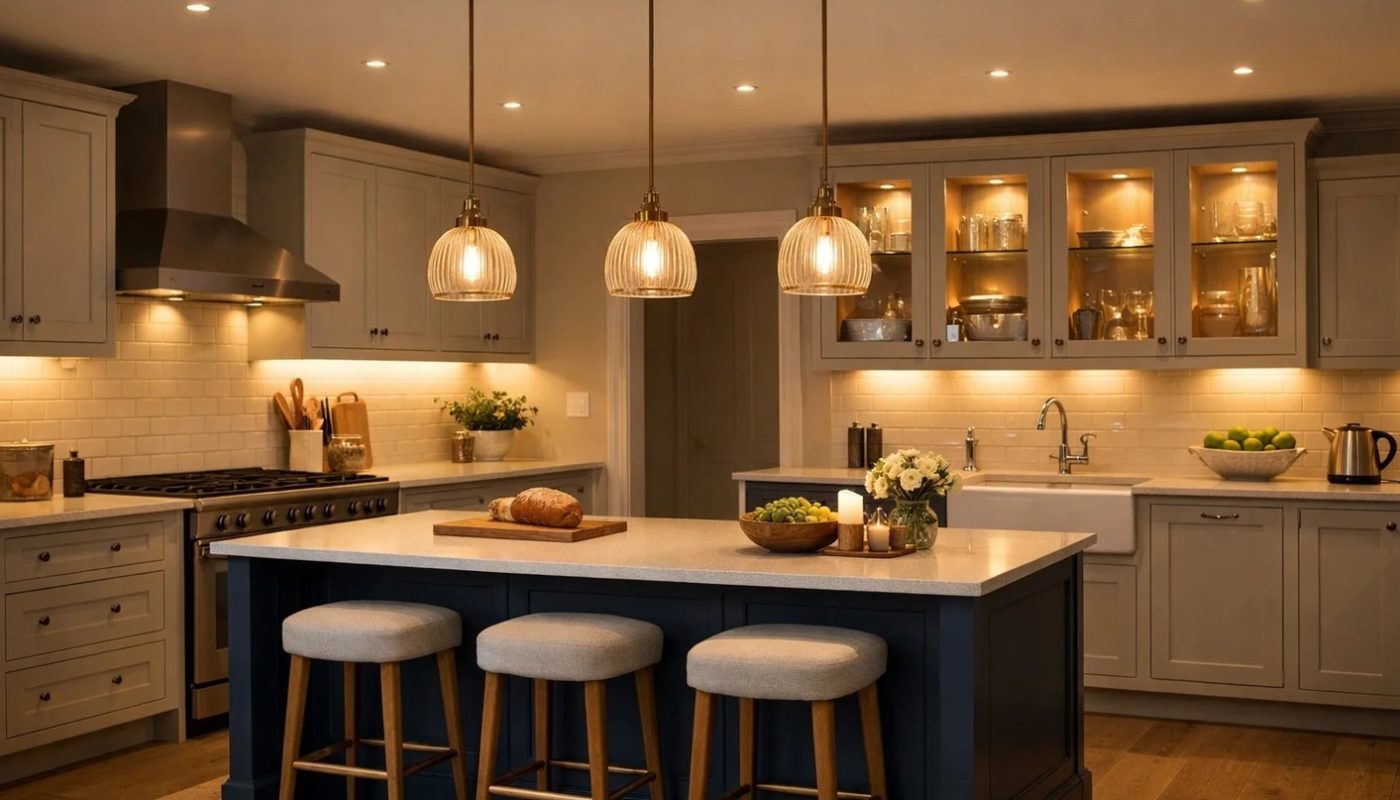
A more deliberate approach starts with identifying where work actually happens in the kitchen, then matching fixtures to those zones rather than to the ceiling grid. Islands and peninsulas benefit from focused fixtures hung at a consistent height above the counter, since this creates a defined pool of light exactly where prep and casual dining occur. Many homeowners find that pendant lights for kitchen offer the right balance of direct downlight and visual interest, filling a role that recessed cans alone cannot manage. Sink areas and stovetops need their own dedicated light source as well, since shadows from the body or cabinetry can otherwise darken these high-use spots.
Once the fixture types are chosen, spacing and height matter as much as the fixture itself. Hanging pendants too high scatters light across the ceiling instead of the counter, while hanging them too low creates glare at eye level for anyone seated nearby. A general guideline places the bottom of a pendant between twenty-eight and thirty-four inches above the counter surface, adjusted for ceiling height and the size of the fixture. Getting this right takes some trial and measurement, but it prevents the common mistake of installing attractive fixtures that end up underperforming.
What to Look For
Fixture selection should account for bulb type and light quality, not just shape or finish. A warm color temperature, generally in the range of 2700 to 3000 Kelvin, tends to suit kitchens because it renders food and skin tones accurately without feeling clinical. Dimmable fixtures give a kitchen flexibility, letting the same space shift from bright task lighting during cooking to a softer glow during a meal. Glass or metal shades that direct light downward tend to outperform fully open designs, since they concentrate brightness on the work surface rather than spreading it across the room.
Efficiency deserves equal attention alongside style, since kitchen lights typically run for several hours a day. Checking wattage and lumen output before buying prevents both underlit counters and unnecessarily high energy bills over the life of the fixture. The ENERGY STAR lighting guidance offers a useful reference point for comparing bulb efficiency and expected lifespan across different fixture types. Reading a few of these specifications before purchasing saves homeowners from replacing bulbs or fixtures within the first year, and it keeps the kitchen both well lit and reasonably priced to operate over time.