
The Fabric Math Nobody Does Before Booking
Most couples planning a Utah wedding assume that renting tablecloths is a simple matter of picking a color and moving on to bigger decisions like catering or music. The thinking goes that linens are background elements, so any supplier with a decent color chart will do. That assumption causes more budget overruns and day-of scrambling than almost any other rental category, because fabric quantity, drop length, and table shape all interact in ways that aren’t obvious until you’re standing in a half-set ballroom wondering why the cloths look wrong.
A big part of the confusion comes from sizing. A 90-inch round cloth looks identical to a 120-inch one in a thumbnail photo, but on an actual 60-inch round table, the difference between a lap-length drop and a full floor-length drape changes the entire feel of the room. Utah’s mix of mountain lodges, barn venues, and hotel ballrooms means table dimensions vary widely, and a linen order calculated for a standard banquet table often fails once it meets a farmhouse-style rental table with a different width. People also underestimate how altitude and outdoor venues affect fabric choice, since lighter polyester blends can shift and wrinkle in wind coming off the canyons in a way that heavier blends resist.
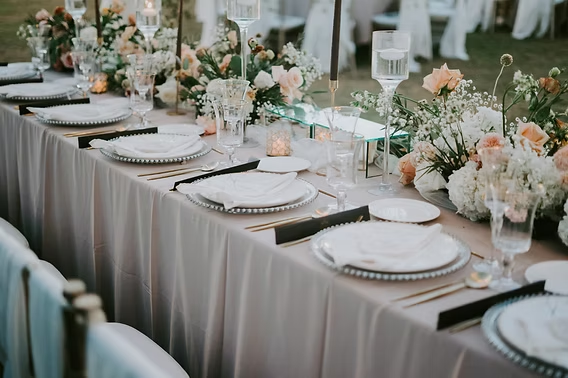
There’s also a tendency to assume one linen style can carry an entire reception, regardless of whether the ceremony backdrop, cocktail tables, and dinner seating all share the same aesthetic. A reception with a rustic outdoor ceremony followed by an indoor formal dinner often needs two distinct linen treatments, not one compromise fabric meant to work everywhere. Couples who skip this distinction sometimes end up with cloths that read as mismatched in photos even though every individual piece was technically correct for its own Table.
Matching Linen Weight to Utah’s Venue Variety
What actually solves these problems is treating linens as a measurement exercise before it becomes a design one. Experienced planners measure table height, width, and seating configuration first, then work backward into fabric choice, because a cloth that looks elegant in a catalog photo can behave completely differently once it’s draped over an uneven outdoor surface or a long farm table. Weight matters as much as color. A midweight polyester holds its shape well in a tented reception, while a lighter voile or sheer overlay might be better suited to an indoor space with climate control.
Timing also plays a bigger role than people expect. Utah’s wedding season runs heavily from May through October, and popular venues in Park City, Heber Valley, and the Salt Lake foothills often get booked out for linens months before the date itself, especially in specific colors tied to seasonal trends. Planners who secure their order early tend to have more flexibility if something doesn’t fit the room once decor is finalized.
Budgeting for linens separately from the rest of the decor line item also helps avoid surprises. Couples who lump tablecloths in with centerpieces or chair covers often lose track of how much square footage of fabric they actually need once napkins, runners, and overlays get added to the order. Breaking the linen budget into its own category, with room for a contingency cloth or two in case of spills or last-minute table additions, tends to prevent the frantic calls to a rental company two days before the event.
Turning Measurements Into an Actual Order
Once the planning fundamentals are in place, the next step is translating them into an order that matches the venue instead of a generic rental package. This means confirming table counts with the venue coordinator, not guessing based on the guest list alone, since round tables and rectangular farm tables often require different cloth dimensions even within the same reception. Couples working with a company that understands regional venue quirks tend to avoid the last-minute substitutions that happen when a standard-size order doesn’t fit the tables actually delivered on-site. For couples navigating this part of planning, working directly with a company offering utah tablecloth rentals can simplify the sizing conversation since local providers already know the dimensions used by the area’s most common venues.
A lot of this groundwork mirrors general wedding logistics advice, and resources like the Brides event planning guidance are useful for understanding how linen decisions fit into the broader planning timeline alongside catering counts and floor plans. Lining up the linen order with those other milestones, rather than treating it as a separate task handled whenever time allows, keeps the whole planning process from feeling rushed in the final weeks.
The final step is less about the cloths themselves and more about communication with whoever is setting up the room. Even a perfectly sized order can look uneven if the person placing it doesn’t know whether the client wants a floor-length formal look or a shorter, more casual drape. Walking through photos of the exact table shape and drop length with the rental coordinator beforehand prevents the kind of day-of guesswork that leads to mismatched tables. Couples who treat linens as a coordinated part of the room design, rather than an afterthought ordered the same week as napkins, consistently end up with a reception space that photographs the way they originally pictured it.


