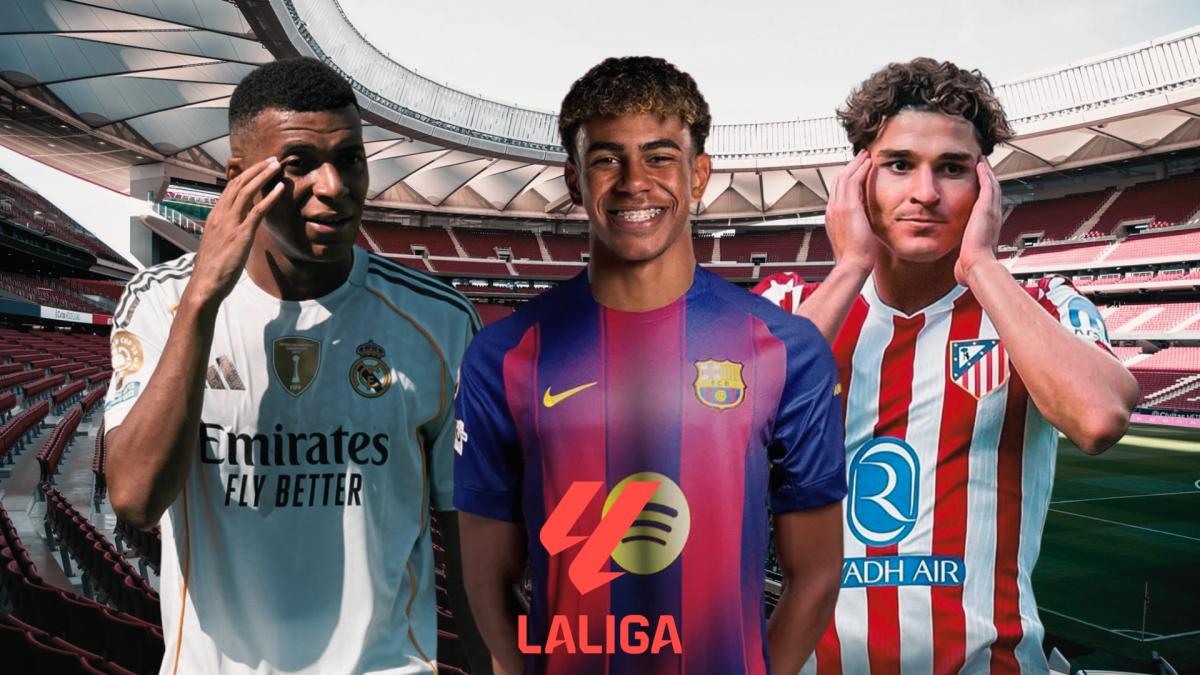
Talking about La Liga pairs with “very clear” head-to-head (H2H) records means looking at matchups where one club has historically dominated results or where certain outcomes—home wins, goals, cards—repeat far more often than in typical fixtures. Strong H2H trends often emerge in long-running rivalries like El Clásico or the Seville derby, but their analytical value depends on how well underlying reasons—structure, psychology, home advantage—persist into the present.
Why Strong H2H Trends Can Be More Than Coincidence
Over a handful of meetings, H2H can be noise, but across dozens or hundreds of games between stable institutions, consistent patterns often reflect deeper realities. Real Madrid and Barcelona have met 262 times competitively, with Madrid leading 106 wins to 103, and 52 draws. In La Liga alone, Madrid hold an 80–75 win edge with 35 draws from 191 meetings, suggesting a slight structural advantage over decades rather than a short-term blip.
Similarly, official figures for the Seville derby show Sevilla with a clear edge: in the Seville derby’s Primera División history, Sevilla lead Betis by 32 league wins to 21, with the overall competitive record across all tournaments also tilted toward Sevilla. When those disparities persist across eras and competitions, they point to institutional gaps in resources, squad quality or tactical coherence that repeatedly shape the same fixture.
What Makes a Head-to-Head Pattern “Clearly One-Sided”?
A H2H becomes meaningfully one-sided when one team’s win count materially exceeds the other’s across a substantial number of meetings, and when that dominance continues into recent decades rather than being confined to early history. El Clásico fits this: despite Barcelona surges, Madrid still hold a narrow overall lead in competitive wins. Sevilla–Betis also qualifies, with Sevilla’s 23 wins to Betis’s 10 (plus 14 draws) in one commonly cited modern sample underscoring how often the derby has gone one way.
Beyond pure W–D–L, “clear” patterns also appear in goal trends—matches repeatedly hitting certain lines—or in consistent home dominance regardless of league form. The Seville derby, for example, is repeatedly described by La Liga as an “intense” fixture with feverish atmospheres and frequent cards, indicating a stable behavioural profile that sits on top of the raw result counts.
Table: Examples of La Liga H2H Matchups with Strong Historical Patterns
A focused look at a few emblematic fixtures clarifies what “H2H dominance” can mean in concrete numbers.
| Fixture | Competitive H2H snapshot* | Notable pattern |
| Real Madrid vs Barcelona | Madrid 106 wins, Barça 104, 52 draws (all comps) | Madrid slight overall lead in El Clásico |
| Real Madrid vs Barcelona | La Liga only: Madrid 80 wins, Barça 75, 35 draws | Madrid narrow league edge over decades |
| Sevilla vs Real Betis | Sevilla 23 wins, Betis 10, 14 draws (modern sample) | Sevilla clear series lead in El Gran Derbi |
| Sevilla vs Real Betis | Primera División H2H: Sevilla lead in league meetings | Historically Sevilla-dominated derby |
*Numbers summarise commonly cited snapshots; exact tallies shift as new matches are played but the directional dominance has persisted.
These patterns matter because they show more than random variance: even as squads and tactics change, certain institutional matchups have repeatedly produced similar distributions of results.
Mechanisms: Why Certain La Liga H2Hs Become So Lopsided
H2H dominance usually stems from overlapping causes. In El Clásico, both clubs are giants, but Madrid’s overall lead reflects long stretches where their squad depth and financial power exceeded Barcelona’s, especially in earlier eras. Periods dominated by Di Stéfano, the Galácticos and recent Champions League-winning squads all contributed clusters of Madrid wins that still echo in the aggregate record.
In the Seville derby, Sevilla’s more consistent participation in European competitions and higher average league finishes over the last two decades correlate with stronger squads and tactical continuity, translating into more derby wins. Tactical matchups also matter: for years, Betis sides that tried to play expansive football into Sevilla’s more physically robust, transition-aware teams often exposed themselves in ways that the derby’s intensity punished, reinforcing the existing H2H gap.
When Historical Matchups Retain Predictive Power – and When They Do Not
H2H trends retain more value when the structural gap driving them still exists. When Real Madrid and Barcelona both occupy the top end of the table, the long-term 80–75 La Liga split suggests the fixture is closer to balanced than casual narratives about “current dominance” imply; neither side can be treated as a perennial favourite solely on history.
Conversely, a derby like Sevilla–Betis can see its H2H edge challenged when Betis enter a period of sustained improvement, evidenced by recent runs of six straight league wins and a 2–1 comeback in the derby, indicating a potential shift in power even within an overall Sevilla-favoured record. In those moments, blindly trusting the historic H2H without adjusting for present form and squad quality risks misreading a fixture in transition.
UFABET, Pre-Match Use, and Not Overrating H2H on Its Own
When scanning La Liga fixtures on a betting environment or football betting website such as UFABET168, strong H2H narratives can dominate pre-match discussion: pundits repeat that “Madrid own this fixture” or “Sevilla always find a way against Betis.” In a pre-match analysis perspective, the disciplined approach is to treat H2H as one diagnostic layer among many. First, the analyst notes genuine asymmetries—Madrid’s slight lead versus Barça, Sevilla’s more pronounced edge over Betis—then checks whether current conditions still support those tendencies: league positions, recent form, tactical fit, and absences. If the present context aligns with historical dominance (for example, the stronger squad also holds the strong H2H), the head-to-head becomes reinforcing evidence; if not, it is demoted to background colour. This prevents historic numbers from overriding fresh information when the two conflict.
List: Practical Filters for Deciding When a La Liga H2H Is “Strong Enough” to Matter
Because almost every fixture has some history, practical filters help separate genuinely meaningful H2H trends from incidental noise. Each filter connects a measurable condition to the likelihood that the pattern reflects something enduring.
- Sample size and balance: give more weight to H2H records built over dozens of competitive meetings (e.g., El Clásico’s 191 La Liga clashes) than to small runs of 4–5 games, where variance dominates.
- Recent decades vs distant past: check whether dominance persists in modern football eras; a club with a long-term lead but an even or reversed record in the last 10–15 years may no longer hold the same edge on the pitch.
- Competition and venue mix: distinguish between league, cup and neutral-site meetings; for example, Real Madrid’s and Barcelona’s records differ slightly between La Liga and other tournaments, and home–away dynamics in derbies can distort aggregate summaries.
- Structural alignment with current reality: compare historic dominance with current squad quality, table position and tactical identity; if the same side still has clear structural advantages, H2H is more likely to retain relevance. If not, it becomes more anecdotal.
Using these filters ensures that “strong H2H” is a logically grounded label, not shorthand for “this fixture feels one-sided.”
Where Heavy Reliance on H2H Statistics Breaks Down
H2H analysis fails when it is applied with no context. A club can accumulate a favourable record across decades yet enter a particular match with key injuries, a new coach and a radically different style that has not been tested in that rivalry. In such cases, leaning on the historic win count ignores the immediate factors that more directly shape the upcoming 90 minutes.
It also becomes unreliable when used to justify narratives about “mental blocks” without checking recent evidence. For instance, specific Clásico seasons have seen Barcelona win four straight games by an aggregate 16–7, despite Madrid’s overall historical lead, illustrating how short modern phases can diverge sharply from the long-term H2H story. Without separating era-level dominance from season-level fluctuations, analysis can slide into superstition—treating numbers as destiny rather than as one input into a broader, dynamic picture.
Summary
Some La Liga fixtures, most notably El Clásico and the Seville derby, carry head-to-head records that are truly “clear”: Real Madrid hold a narrow but persistent lead over Barcelona in competitive meetings and La Liga matches, while Sevilla maintain a more pronounced advantage over Real Betis across league and cup clashes. These asymmetries reflect longstanding differences in resources, tactical eras and squad quality rather than mere coincidence.
Yet even in these matchups, H2H is most useful when aligned with current realities. By evaluating sample size, recency, competition type and present structural strength before leaning on head-to-head trends, observers can distinguish between historical colour and genuinely actionable insight about how today’s La Liga pairs are likely to behave.